
Key Takeaways
- Scale of Operations: Wing and Walmart’s Houston expansion represents the largest metropolitan stress test for commercial drone delivery to date.
- Airspace Management: The implementation of BVLOS drone corridors in Houston will set the regulatory template for 2026 urban airspace access.
- Pilot Impact: Part 107 and recreational pilots must adapt to increased commercial congestion and rely heavily on Remote ID and ADS-B for deconfliction.
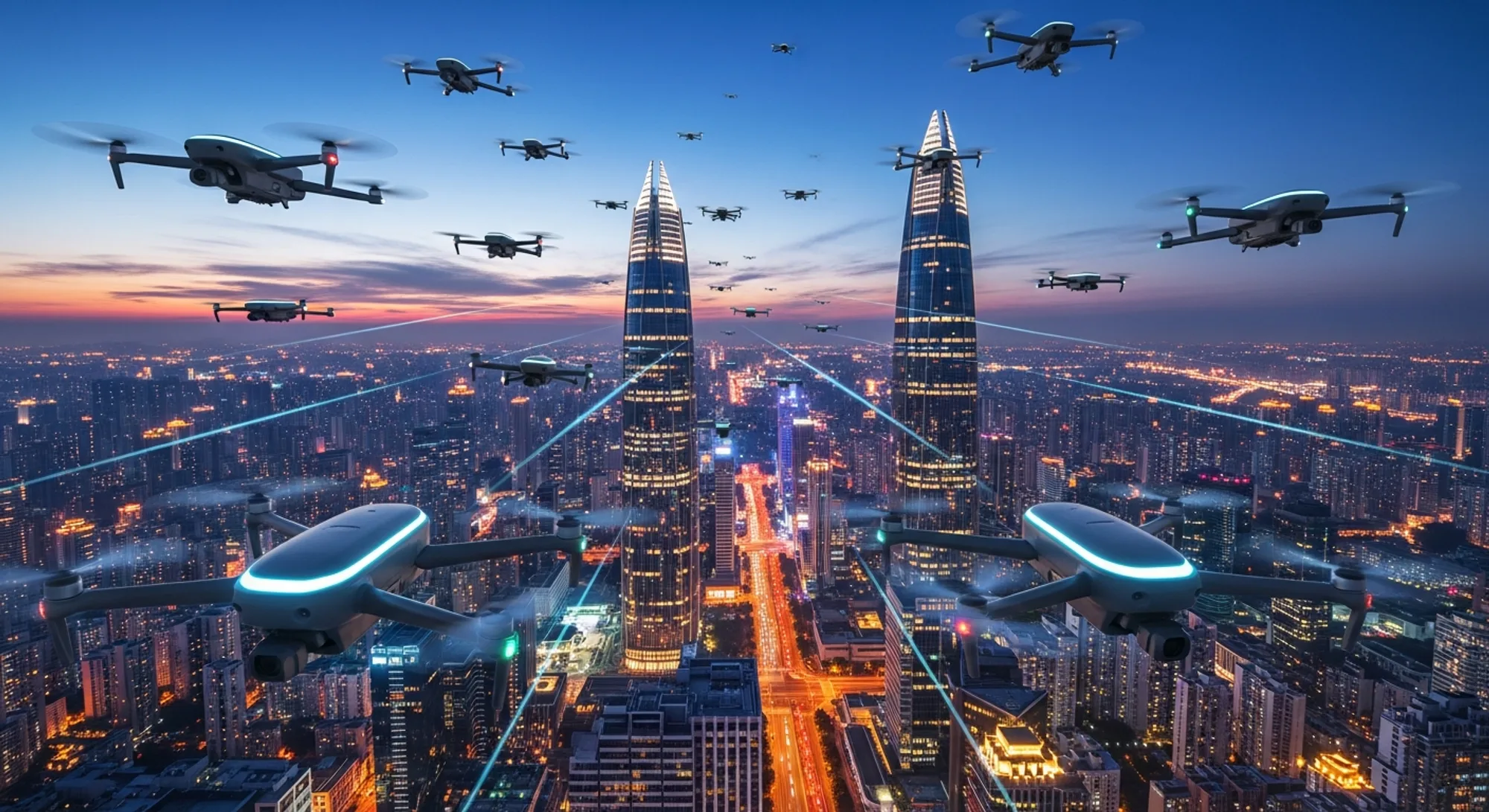
The concept of drone delivery has graduated from rural testing grounds to the complex, concrete ecosystem of the American metropolis. In a move that signals a definitive shift in the industry, Wing has announced its most significant operational expansion yet in partnership with Walmart, targeting the Greater Houston area. For industry analysts and enterprise pilots, this is not merely a retail announcement; it is the 2026 stress test for urban airspace.
As Wing drone delivery Houston operations ramp up, we are witnessing the first true friction point between theoretical UTM (Unmanned Traffic Management) and the chaotic reality of urban skies. This expansion serves as a bellwether for how the FAA will manage high-density commercial drone congestion moving forward.
The Walmart-Wing Alliance: Scaling Up Complexity
According to recent reports from Robotics & Automation News, this initiative marks Wing’s biggest expansion to date. Unlike previous pilot programs limited to low-density suburbs, the Houston expansion targets a sprawling, traffic-heavy environment. This shift forces the integration of autonomous delivery systems into airspace already crowded with news helicopters, Part 107 commercial inspectors, and recreational flyers.
The operational model relies on high degrees of automation. We are seeing a shift away from pilot-in-the-loop for every flight toward system-level oversight. This aligns with broader autonomous inspection trends in the US enterprise sector, where the pilot's role is evolving from stick-and-rudder manipulation to systems management.
BVLOS Corridors and Regulatory Friction
The crux of the Houston expansion lies in the regulatory framework. To make delivery viable, Wing operates under specific Beyond Visual Line of Sight (BVLOS) waivers. This creates what are effectively BVLOS drone corridors—invisible highways in the sky where delivery drones have operational priority via automation.
For the average Part 107 pilot, this introduces new urban airspace regulations 2026 challenges. The "see and avoid" principle is being replaced by "detect and avoid" (DAA) technology. Enterprise pilots operating in Houston must now be hyper-aware of these automated corridors. The risk of Part 107 airspace conflicts is no longer hypothetical; it is an operational hazard.
Pro Tip: If you are flying commercially in Greater Houston, ensure your Remote ID is fully functional and consider equipping ADS-B transponders even if not strictly mandated for your drone class. Electronic conspicuity is your best defense against automated traffic.
The Technology Gap: Consumer vs. Enterprise
While Wing deploys sophisticated DAA arrays, the consumer and prosumer market is still catching up. Recent reports from DroneXL regarding DJI firmware updates highlight that even advanced consumer drones like the Mavic series rely heavily on visual sensors that may not communicate directly with commercial UTM grids. This creates a disparity in the airspace: highly networked delivery drones flying alongside unconnected consumer hardware.
Furthermore, the physical environment of Houston presents urban canyon challenges. Tall structures and metallic infrastructure can cause signal reflection and GPS drift. Delivery drones utilize redundant navigation systems to mitigate this, but independent operators must be vigilant. Pilots should review techniques for urban canyon flying to avoid GPS multipath crashes when operating near these delivery zones.
Market Implications and Future Outlook
The Walmart drone expansion impact extends beyond delivery times. It drives a demand for skilled technicians and system operators. We are seeing a surge in recruitment for specialized roles, such as prototyping technicians at major aerospace firms like Quantum Systems (as noted by sUAS News). The industry is pivoting from manufacturing hardware to maintaining complex autonomous networks.
If the Houston expansion succeeds without significant safety incidents, it will likely trigger a rapid rollout of similar urban airspace regulations 2026 across other major US cities. However, if congestion leads to near-misses or collisions, we may see a regulatory snap-back that could restrict Part 107 operations in urban centers. As 2026 progresses, all eyes are on the skies over Houston.
Sources & Further Reading
- The Verge - Coverage on evolving drone delivery networks and technology.
- sUAS News - Industry updates on Quantum Systems and commercial UAV staffing.
- DroneXL - Reporting on DJI firmware and consumer drone limitations.
- Robotics & Automation News - Details on Wing and Walmart's Houston expansion.