

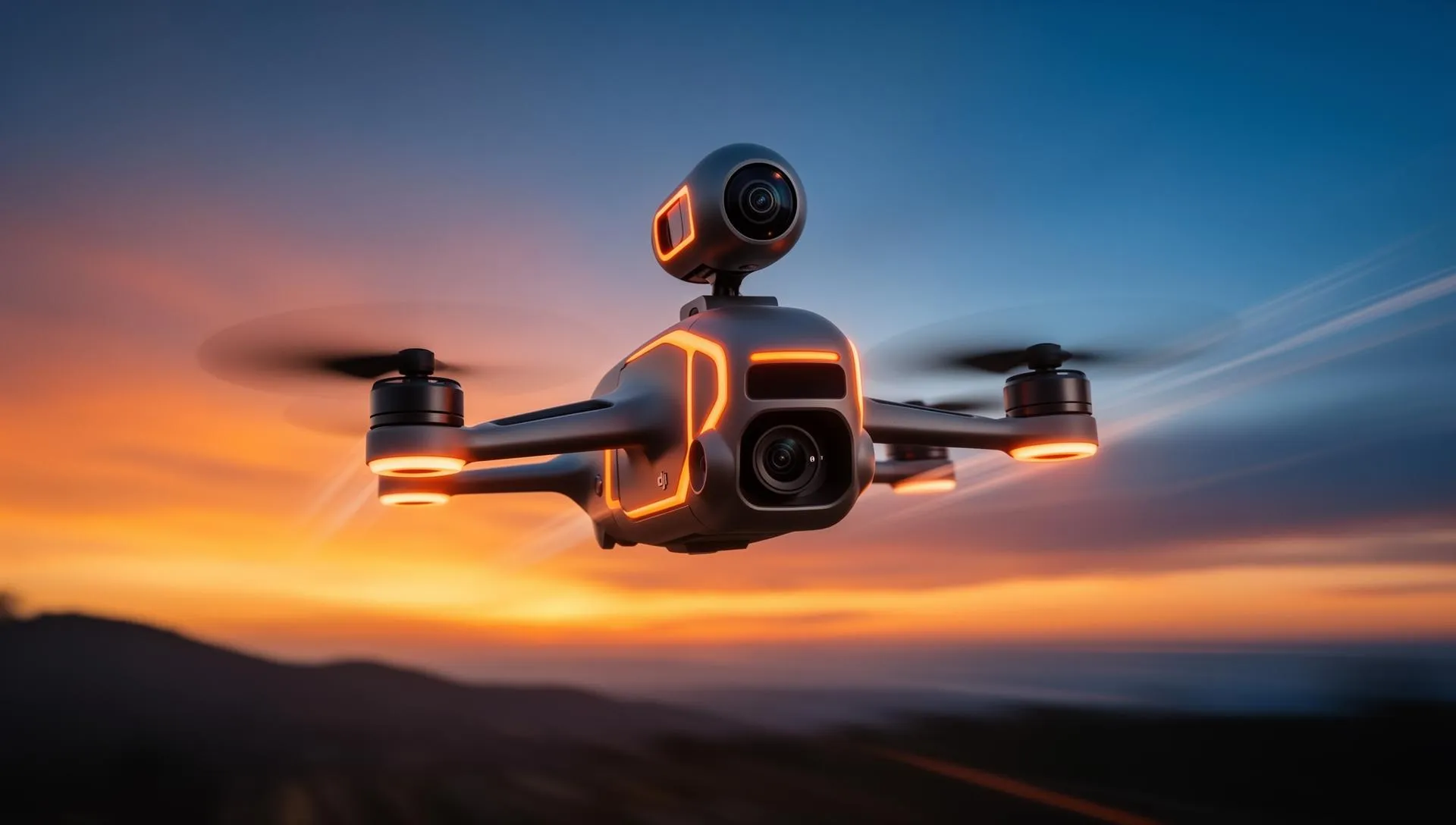
Key Takeaways
- Predicted Release Date: Q2 2026, following DJI's established 2-year Cinewhoop product cycle.
- Camera Upgrades: Rumors point to a 1-inch sensor capable of 5.3K/60fps to compete with naked GoPros.
- AI Integration: Enhanced "Guardian" obstacle avoidance derived from industrial autonomy tech.
- Price Expectation: Likely maintaining the $999 (Fly More Combo) price point despite hardware upgrades.
The FPV (First Person View) landscape has shifted dramatically since the Avata 2 launched, bridging the gap between chaotic DIY builds and polished cinema tools. As we move deeper into 2026, the Cinewhoop market is hungry for its next evolution. While the Avata 2 perfected the user experience, DJI Avata 3 rumors suggest the next iteration will prioritize raw performance and professional-grade imaging.
Based on supply chain chatter and patent filings, the new DJI drone 2026 lineup appears to emphasize sensor size and autonomy. Here's our in-depth analysis of the DJI Avata 3 release date, expected specifications, and price positioning.
Release Date Analysis: When Will the Avata 3 Launch?
DJI has historically adhered to a roughly 24-month cycle for its specialized drone categories. The original Avata launched in August 2022, followed by the Avata 2 in April 2024. If this pattern holds, a Q2 2026 launch window is highly probable.
Launch Window Prediction
Our market analysis points to a late April or early May 2026 announcement. This timing allows DJI to capture the summer outdoor adventure market well before the holiday rush.
However, internal competition might shift this timeline. We recently analyzed the confusion surrounding the DJI Lito 1 leaks and the shift to "zero-stick" autonomy. If the Lito is intended as a budget-friendly FPV entry point, the flagship Avata 3 could be pushed to Q3 to avoid cannibalizing sales.
Projected Specs: The 1-Inch Sensor Revolution
The most persistent element of the DJI Avata 3 specs wish list centers on the camera. The current 1/1.3-inch sensor performs admirably, but professional FPV pilots still strap heavy "naked" cameras to their rigs for higher fidelity. To truly eliminate the need for external action cams, DJI must upgrade the sensor.
Camera and Imaging
Industry insiders suggest DJI is testing a 1-inch sensor module adapted from the Air series but ruggedized for high-G maneuvers. This would deliver significantly better low-light performance—a critical factor we discussed in our 2026 Low-Light Drone Sensor Shootout.
AI-Powered Autonomy
Perhaps the most compelling development is the trickle-down of industrial autonomy features. Recent reports from Unmanned Systems Technology highlight substantial leaps in AI-powered autonomy for industrial vehicles. DJI often simplifies these enterprise-grade obstacle avoidance algorithms for consumer products.
The Avata 3 isn't just about flying faster; it's about crashing less. We expect 'Guardian AI' to assist in tight indoor gaps where GPS is unavailable.
This aligns with broader trends across the sector. Even startups like Grid Aero are raising capital to scale autonomous flight capabilities. While Grid Aero focuses on heavy lift, the underlying software logic for spatial awareness is universally applicable—and directly relevant to DJI FPV rumors.
Avata 2 vs. Avata 3: The Expected Leap
How will the new model stack up against the current king? Here's a breakdown based on current DJI Avata 3 rumors.
| Feature | DJI Avata 2 (Current) | DJI Avata 3 (Rumored) |
|---|---|---|
| Sensor Size | 1/1.3-inch CMOS | 1-inch CMOS (Stacked) |
| Video Resolution | 4K/60fps HDR | 5.3K/60fps or 4K/120fps |
| Transmission | O4 (13km) | O4+ or O5 (18km + lower latency) |
| Flight Time | 23 minutes | 28 minutes (battery chemistry update) |
| Obstacle Sensing | Binocular Fisheye (Rear/Down) | Omnidirectional LiDAR assist |
Durability and Design Improvements
The Avata series is defined by its protective prop guards. However, pilots pushing the limits often encounter frame fractures on hard impacts. We expect DJI to utilize new composite materials that reduce weight while increasing impact resistance.
This mirrors the trend in rugged UAV platforms currently being developed for defense applications, where material science prioritizes resilience without sacrificing payload capacity.
For those currently debating between building a custom rig or waiting for official hardware, check our comparison: "Avata 2 vs. Custom 5": The 2026 Action Sports Chase Cam Audit.
Price Prediction: Holding the Line
Despite inflationary pressures, the DJI Avata 3 price will likely remain competitive to fend off growing competition from HoverAir and Skydio.
- Drone Only: Estimated $529
- Fly More Combo (Goggles 4): Estimated $1,099
Buying Advice
If you need a Cinewhoop today for paid client work, the Avata 2 remains a capable tool. However, if you rely heavily on low-light indoor flying for real estate tours or event coverage, the 1-inch sensor rumored for the Avata 3 may be worth the wait.
As we approach the anticipated release window, stay tuned to DroneNomad.info. We'll update this guide as concrete leaks regarding the new DJI drone 2026 lineup emerge.
Sources & Further Reading
- sUAS News - Aerospace & Defense Startup Grid Aero Raises $20M Series A
- Unmanned Systems Technology - AI-Powered Autonomy for Industrial & Military Land Vehicles
- Unmanned Systems Technology - Rugged UAV Platforms for Civilian & Defense Applications
