
Key Takeaways
- The "Lito" Paradigm: Leaked FCC filings suggest DJI is pivoting toward "zero-stick" autonomy, prioritizing AI-driven tracking over manual stick inputs.
- Direct Competitors: The DJI Lito 1 and X1 appear positioned to challenge the HoverAir series, targeting content creators rather than traditional pilots.
- Regulatory Friction: Controller-free flight introduces complex liability questions regarding Visual Line of Sight (VLOS) and Pilot in Command (PIC) authority in 2026.
- Inventory Shifts: Aggressive pricing on existing Mini series bundles indicates a clearing of the deck for this new autonomous category.
The End of the Joystick? Analyzing the DJI Lito 1 and X1 Leaks
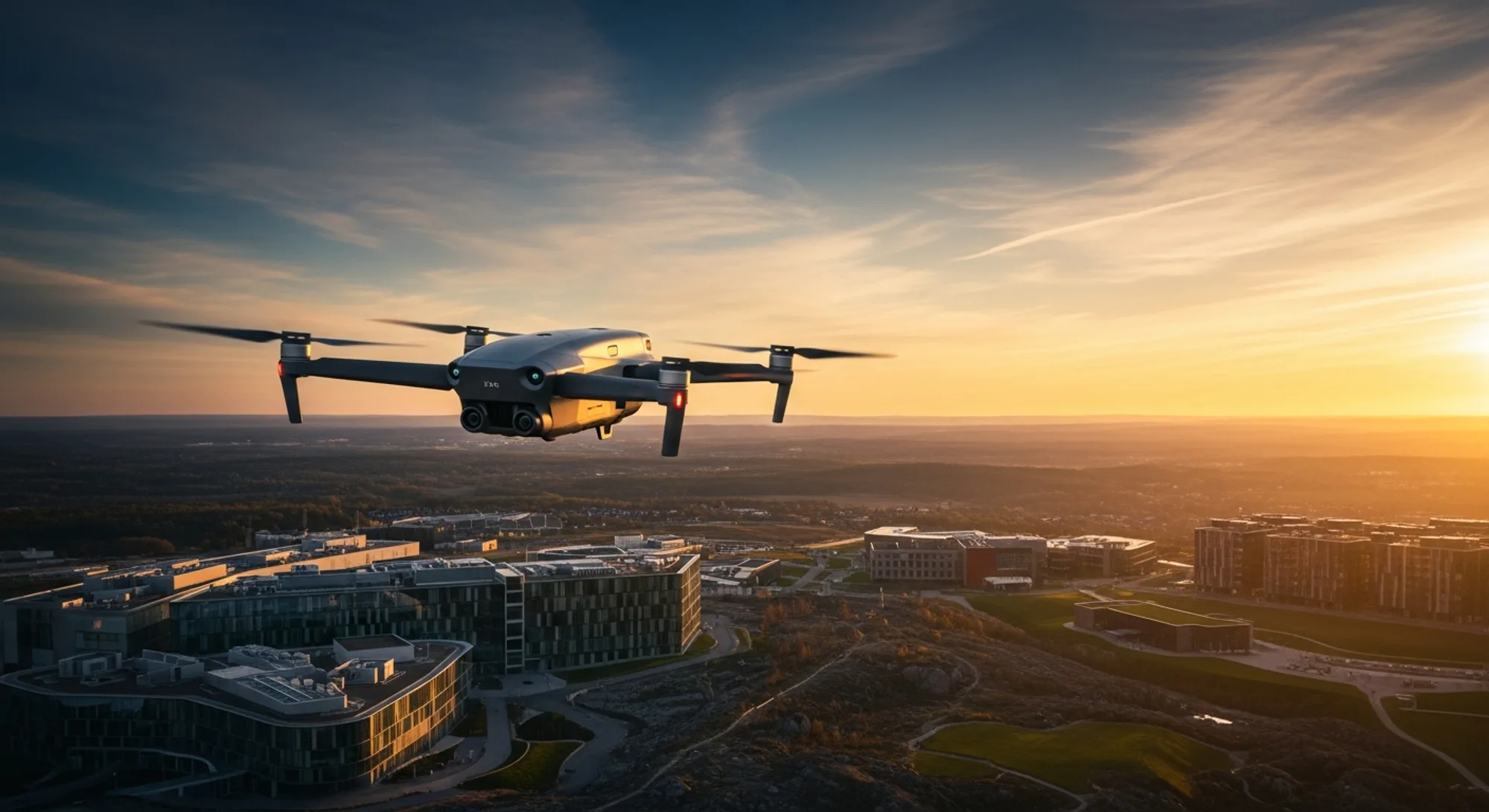
For the past decade, the relationship between a drone pilot and their aircraft has been defined by the physical connection of the remote controller. Whether it was the bulky phantom transmitters of the early days or the sleek RC 2, the "stick" was the primary interface. However, recent DJI Lito 1 leaks and surfacing DJI X1 rumors suggest that 2026 will mark a fundamental divergence in DJI’s product strategy. We are witnessing the birth of "Zero-Stick" autonomy—a shift that fundamentally alters not just how we capture footage, but how we define the role of a pilot.
Recent certification filings have confirmed the existence of new SKUs that do not fit the traditional Mini, Air, or Mavic lineages. Instead, these devices appear to focus on autonomous drone tracking and ultra-portability, signaling DJI’s intent to dominate the "flying camera" market currently occupied by competitors like Zero Zero Robotics. As an analyst specializing in enterprise systems and regulation, I see this not merely as a new gadget launch, but as a stress test for current AI navigation standards and airspace regulations.
Hardware Analysis: What the Filings Reveal
According to reports from industry watchers, specifically coverage regarding the confirmation of the Lito 1 and X1, DJI is preparing a bifurcated launch. The terminology used in the leaks—specifically the "Lito" codename—suggests a lightweight, approachable architecture distinct from the "Mini" series performance targets.
The "X1" designation is particularly telling. It mirrors the naming convention of the HoverAir X1, a device that gained massive popularity for its ability to launch from a palm, execute pre-programmed flight paths (orbits, bird's eye, follow), and land without a controller. If DJI is targeting this sector, we can expect the Lito 1 to feature fully enclosed prop guards and a single-axis or dual-axis mechanical gimbal, sacrificing some wind resistance for safety and close-proximity flight capability.
This hardware shift necessitates a deep understanding of what you are actually buying. As I detailed in my analysis of the 2026 split in sub-250g buying strategy, consumers must now choose between a "drone" (Mini series) and a "camera that flies" (Lito series). The Lito 1 will likely lack the transmission range of O4 flight systems, relying instead on Wi-Fi direct links to smartphones for short-range monitoring, while the onboard AI handles the actual piloting.
The "Zero-Stick" Philosophy and AI Reliance
The core promise of controller-free drones is the removal of the skills gap. Traditional drone flight requires learning orientation, stick sensitivity, and braking distances. Zero-stick flight relies entirely on computer vision.
For the Lito 1 to succeed where others (like the Snap Pixy) failed, DJI must leverage the neural processing engines currently found in their high-end Mavic and Enterprise series. The drone must construct a 3D voxel map of its surroundings in real-time to avoid obstacles while tracking a subject that is moving unpredictably. This requires a significant leap in "SLAM" (Simultaneous Localization and Mapping) technology, miniaturized for a sub-250g airframe.
The risk here is over-trusting the automation. In my guide on how to decode the spec sheet, I often warn that "obstacle avoidance" is not "obstacle immunity." A zero-stick drone operating in a dense urban environment or a forest creates a scenario where the user cannot intervene quickly if the AI misinterprets a thin branch or a glass surface.
Regulatory Hurdles: Who is Pilot in Command?
The most fascinating aspect of the AI drone regulation 2026 landscape is the question of liability. The FAA and EASA operate on the principle of a "Pilot in Command" (PIC) who is ultimately responsible for the flight. If a user throws a Lito 1 into the air and taps "Follow" on a phone screen, are they maintaining Visual Line of Sight (VLOS) and situational awareness?
If the user is looking at the camera subject (themselves) or performing an activity (cycling, running) while the drone follows, they are technically violating the requirement to maintain situational awareness of the airspace. While enforcement on this has been lax for hobbyists, the proliferation of potentially millions of autonomous flying cameras changes the risk profile.
Furthermore, Remote ID compliance becomes tricky. If the drone is controlled via a smartphone app rather than a dedicated serialized controller, the phone's GPS becomes the broadcast point for the Control Station location. We have already seen friction in this area, which I covered in my analysis of FAA Remote ID fines in the first enforcement wave. Users of the Lito 1 will need to be acutely aware that "autonomous" does not mean "exempt from federal law."
Market Positioning: Why Now?
Why is DJI diversifying into this lower-tier, high-automation market now? The answer lies in market saturation and inventory management. Recent reports from Mashable highlight aggressive discounts on the DJI Mini 5 Pro, with price cuts up to $500. Such drastic price action on a flagship Mini drone usually signals two things: a clearing of inventory and a segmentation of the customer base.
DJI realizes that the Mini Pro line has become too complex and expensive for the casual Instagram user. By pushing the Mini series upmarket (closer to the Air series) and introducing the Lito/X1 as the entry-level "lifestyle" option, they capture both the photographer and the influencer without cannibalizing sales. The Lito 1 isn't competing with the Mini 5 Pro; it's competing with the selfie stick.
The Handheld Hybrid Factor
Another rumor gaining traction is the dual-utility of the Lito frame. Reports from BGR discuss the rising popularity of mounts that turn drones into handheld gimbal cameras. It is highly probable that the Lito 1 will officially integrate this feature, allowing the drone to fold into a handle shape and record stabilized ground video, effectively killing the lower end of the Osmo Pocket line.
This hybrid approach aligns with the "creator economy" demands of 2026. A device that can film you from the sky and then immediately be grabbed for a vlog-style walk-and-talk offers immense value. However, this form factor imposes strict limits on battery size and thermal management, meaning flight times for the Lito 1 will likely hover around the 10-15 minute mark, significantly lower than the 30-40 minutes pilots are used to with the Mini series.
Pro Tip: If you are considering the Lito 1 for "Follow Me" sports usage, be wary of the top speed. Most zero-stick drones are capped at 15-18 mph to ensure the vision sensors can process the environment. If you are mountain biking or skiing, a traditional drone with a controller remains the superior tool for high-speed tracking.
Conclusion: The Era of the Director
The DJI Lito 1 leaks confirm that the drone industry is bifurcating. On one side, we have high-performance aircraft for pilots who demand control, range, and raw image quality. On the other, we have intelligent flying robots designed for users who simply want the shot without the hassle of piloting. As we move deeper into 2026, the question for buyers is no longer "How well can I fly?" but "How well can the drone fly itself?"
While the technology is exciting, it requires a shift in mindset regarding safety and regulation. The Lito 1 may fly itself, but the fines for airspace violations will still find their way to the human owner.
Sources & Further Reading
- Notebookcheck - DJI Lito 1 and X1 drones "officially" confirmed
- Mashable - Best DJI deal: Save $500 on DJI Mini 5 Pro Fly More Combo
- BGR - You Can Turn Your Drone Into A Handheld Camera With This Clever Mount
- The Verge - Drones Technology News