
Key Takeaways
- Federal preemption is not a shield: While the FAA controls airspace, it does not control land use or privacy laws, leaving pilots vulnerable to state-level lawsuits.
- Nuisance trumps trespass: In 2026, property owners find it legally easier to sue for "nuisance" (loss of enjoyment) than for "aerial trespass" (physical invasion).
- The curtilage rule matters: Low-altitude drone flight within the immediate area of a home (curtilage) triggers the strictest privacy protections under the Fourth Amendment.
- Data is your defense: Comprehensive flight logs are often the only evidence that can prove you were transiting navigable airspace rather than hovering.
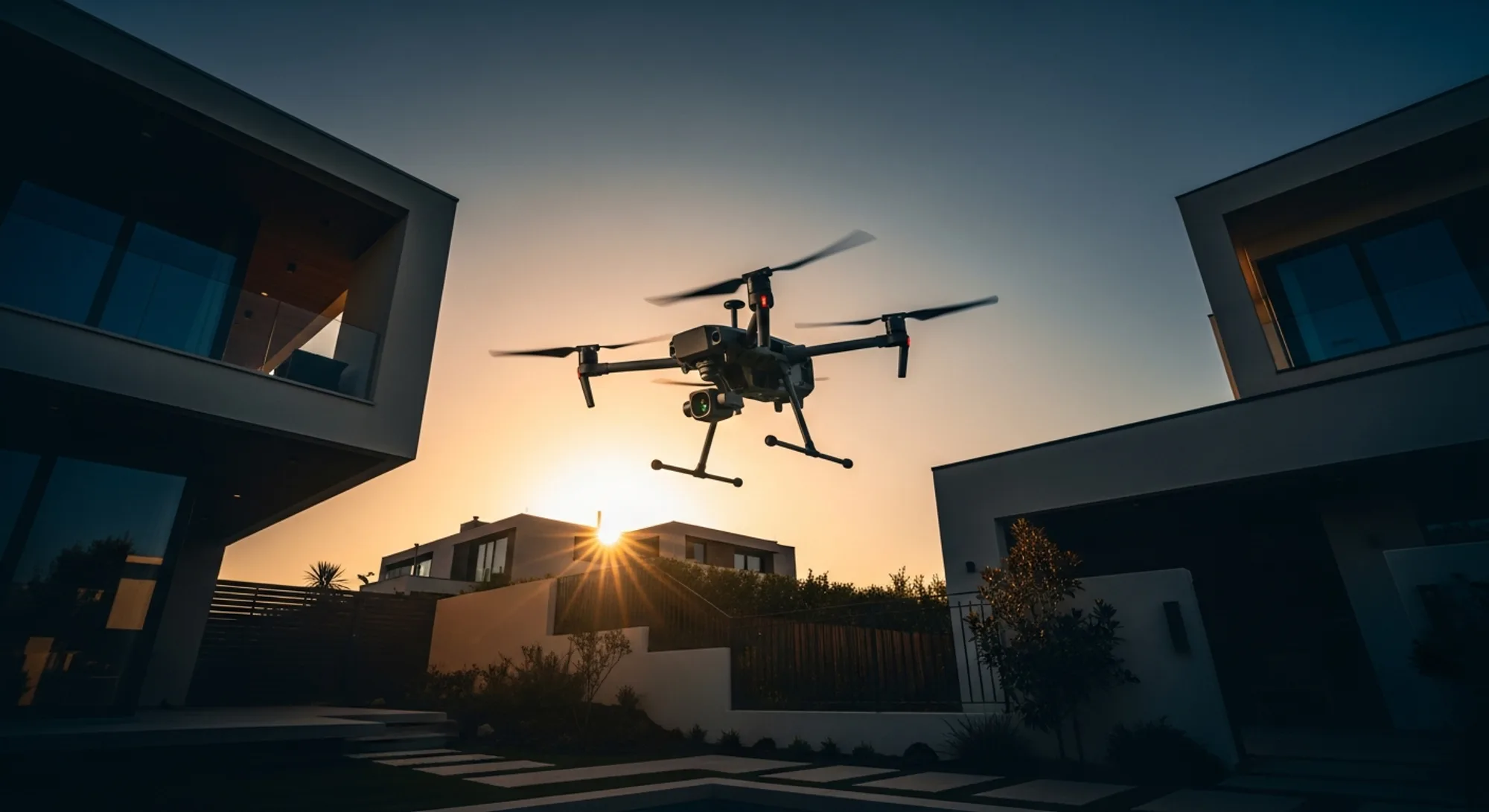
If you fly drones commercially or recreationally, you've likely encountered the "Shotgun Defense"—the angry property owner standing on their porch, claiming you're trespassing because your drone hovers 100 feet above their backyard. In 2026, the friction between drone property rights and federal airspace authority has reached a boiling point.
For years, pilots recited the mantra: "The FAA owns the air." While technically true regarding safety regulation, this reductionist view leads pilots into dangerous legal waters. The legal landscape of aerial trespass laws in 2026 has shifted dramatically. Courts have moved away from simple arguments about airspace ownership toward complex litigation involving privacy, nuisance, and the "quiet enjoyment" of property.
As a drone journalist tracking these regulations daily, I can tell you that hiding behind FAA preemption is no longer a get-out-of-jail-free card. Here's the reality check on property lines and airspace for the modern pilot.
The Grey Zone: Where Soil Meets Sky
The fundamental conflict traces back to the 1946 Supreme Court case United States v. Causby. The Court ruled that a landowner owns "at least as much of the space above the ground as he can occupy or use in connection with the land." This principle is often referred to as the "immediate reaches" doctrine.
In 2026, this definition remains frustratingly vague. Is the boundary at 83 feet? 200 feet? The FAA explicitly states it controls airspace from the ground up to protect aircraft safety. However, state courts increasingly rule that low-altitude drone flight—specifically below the tree line or roofline—constitutes a violation of homeowner rights.
The "Navigable Airspace" Trap
Just because you have LAANC authorization to fly in a 0ft grid does not grant you the right to hover in someone's backyard. FAA authorization is a safety clearance, not a property easement. It protects you from federal fines, not civil lawsuits.
Trespass vs. Nuisance: The 2026 Legal Shift
The biggest mistake pilots make is focusing exclusively on trespass. Trespass requires a physical invasion of property. Because drones don't touch the ground, proving physical trespass in court is difficult and expensive for homeowners. Consequently, savvy attorneys have pivoted to nuisance claims.
A nuisance claim doesn't require you to touch the land or even enter the "immediate reaches" of the airspace. It simply requires that your operation substantially and unreasonably interferes with the owner's use and enjoyment of their property. Persistent hovering, loud propeller noise, or perceived surveillance can all trigger a nuisance suit, regardless of your altitude.
The Three Pillars of Property Conflict
To understand your liability, you must distinguish between the three main legal threats facing pilots today:
| Legal Concept | Definition | Pilot Risk Level |
|---|---|---|
| Aerial Trespass | Physical invasion of the "immediate reaches" of airspace (usually low altitude). | Medium: Hard to prove without GPS data, but risky below 100 feet. |
| Nuisance | Activity that disrupts the owner's "quiet enjoyment" (noise, fear, harassment). | High: The most common successful claim against pilots in 2026. |
| Privacy Violation | Intrusion upon seclusion; capturing images where there is an expectation of privacy. | Critical: Can lead to criminal charges under voyeurism statutes. |
The Rise of Drone Surveillance Statutes
While the FAA regulates flight, states regulate the camera. This bifurcation trips up many Part 107 pilots. Part 107 privacy guidelines are largely advisory; the FAA suggests you respect privacy but lacks enforcement authority. State laws, however, carry real consequences.
By 2026, more than 25 states have enacted specific drone surveillance statutes or amended existing voyeurism laws to include unmanned aircraft. These laws generally criminalize:
- Capturing images of individuals on private property where they have a "reasonable expectation of privacy" (behind a tall fence, through a window).
- Disseminating those images online without consent.
- Using a drone to harass or stalk an individual.
"The lens is the liability. You can be flying at a perfectly legal 300 feet, but if your 200x zoom is peering into a bedroom window, you are no longer an aviator—you're a voyeur in the eyes of the law."
Furthermore, with Remote ID enforcement now standard, anonymity is dead. Neighbors can use scanning apps to identify your drone's serial number and location in real time. As we analyzed in our report on Remote ID fines and enforcement, the digital license plate on your drone links your flight path directly to you, making nuisance claims far easier to substantiate with data.
The Curtilage Concept: Where Not to Fly
In legal terms, "curtilage" refers to the land immediately surrounding a house—yards, patios, and porches—which courts treat as an extension of the home for privacy purposes. The Supreme Court has historically protected curtilage from warrantless ground searches, and civil courts are now applying similar logic to drones.
Aerial trespass laws in 2026 increasingly view the column of air directly above curtilage as protected space. Transiting over it quickly at 200 feet is generally acceptable. Hovering over it at 50 feet to inspect a roof without permission is a legal minefield.
Pro Tip: The Transit Defense
Courts generally protect "transit." If you're moving from Point A to Point B, you're using the airspace as a highway. If you stop and hover, you're "occupying" the airspace. Always keep your drone moving when flying over non-client residential property.
Practical Protocol: How to Protect Yourself
If you're a commercial mapper or real estate photographer, you cannot avoid flying near property lines. Here's how to mitigate the risk of drone privacy laws affecting your business.
1. Notification is Negotiation
The easiest way to avoid a trespass claim is communication. If you're mapping a construction site, notify adjacent neighbors beforehand. A simple door hanger or brief conversation explaining, "I'm mapping this site, my camera is pointed straight down, and I'll be done in 10 minutes," resolves 90% of issues before they escalate.
2. Telemetry is Your Alibi
In a "he-said, she-said" dispute about whether you were hovering 20 feet or 200 feet above a patio, your flight logs are the only objective truth. Knowing how to access and preserve them is essential.
If a neighbor claims you were surveilling their property, producing a flight log showing steady altitude at 250 feet with a gimbal angle of -90 degrees (straight down) is a powerful defense. For a deeper dive on this topic, read our guide on Flight Log Forensics to understand how to extract this data before you face legal action.
3. Audio Recording is a Felony Trap
Many modern drones record audio. In "two-party consent" states, recording a conversation—even an argument with a neighbor—without their permission can constitute felony wiretapping. Ensure your drone's onboard microphone is disabled unless you have a specific operational need and legal clearance to use it.
The Era of Responsible Airmanship
The "Wild West" days of drone flight are over. In 2026, professional pilots must act as ambassadors for the industry. We operate in a shared space where federal rights intersect with personal privacy. While the Federal Aviation Administration (FAA) grants us the privilege to access the national airspace, that privilege does not override the rights of our neighbors to feel secure in their homes.
Understand the distinction between transit and loitering. Respect the curtilage. And remember: just because you can fly there doesn't mean you should.
Sources & Further Reading
- FAA Part 107 Commercial Operators - Official federal guidelines for commercial drone operations.
- Pilot Institute - Analysis of state vs. federal drone laws.
- AUVSI - Association for Unmanned Vehicle Systems International advocacy resources.